
Marc Nicholas Quinn
Ottawa Injury Lawyer
Category Archives: ottawa trip and fall lawyers
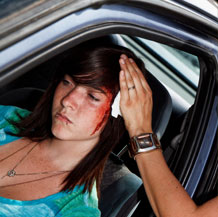
Compensation and damages in personal injury actions. Ottawa injury and accident lawyer reviews some types of damages that could be claimed and awarded in an injury case.
The range of remedies available to a plaintiff in a personal injury action the same as in any other civil proceeding. Generally, the primary remedy is monetary compensation [money]. Monetary compensation is usually referred to as damages. There are many types of damages that can be awarded in a personal injury action. In addition to damages, the court can make declaratory orders in respect of the rights and interests of the parties. In some cases, the court may also grant injunctions (injunctive relief). What is the primary purpose of awarding damages to an injured person? The primary purpose of awarding damages is to place the plaintiff (injured person) back into position they would have been prior to the harm (injuries) having been committed. How is this achieved? In …

Who bears the onus of proof in personal injury actions? Ottawa accident and injury lawyer summarizes onus principle.
Broadly speaking, is the plaintiff bears the burden of proving the elements of their case. Having said that, on some specific issues, the defendant may have the burden of producing evidence. In civil cases such as personal injury actions the burden of proof is on the plaintiff to prove each element of their case on a balance of probabilities. The concept of the burden of proof can be complicated and difficult to understand as a legal principle. Essentially, the burden of proof covers two main notions, the burden of producing evidence and the burden of persuasion. In terms of producing evidence, the plaintiff has the responsibility of providing sufficient evidence to prove that a fact exists. The plaintiff has the responsibility of providing sufficient evidence to prove that …